
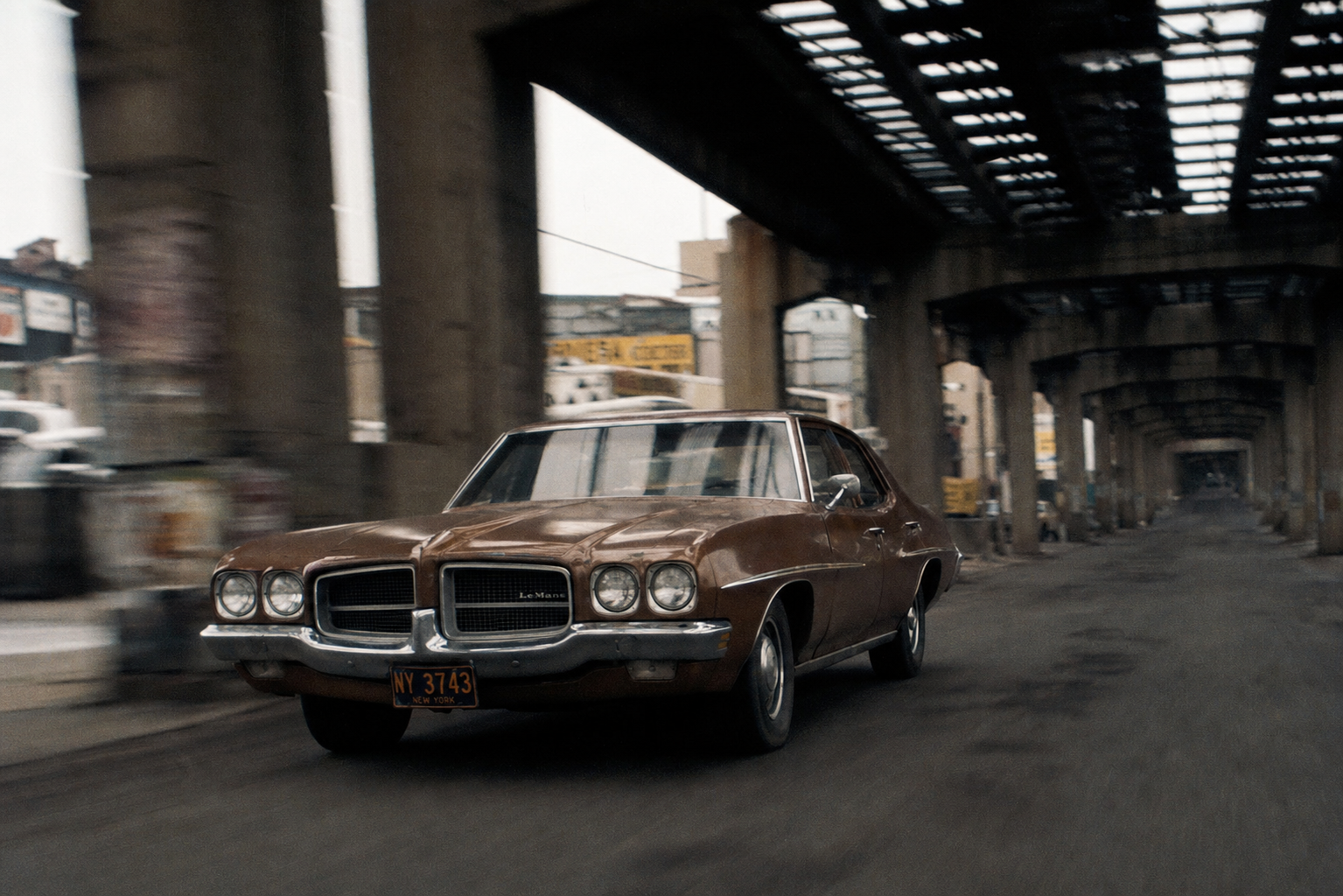
The French Connection begins in Marseille and ends in an abandoned building on Long Island. But it is really a New York film — thick with the city’s density, its grime, its particular brand of institutional exhaustion. William Friedkin shoots it like a documentary. The streets are wet without being beautiful. The bars are loud without being warm. The police are overworked, underpaid and held together by obsession rather than procedure.
New York Before the Chase
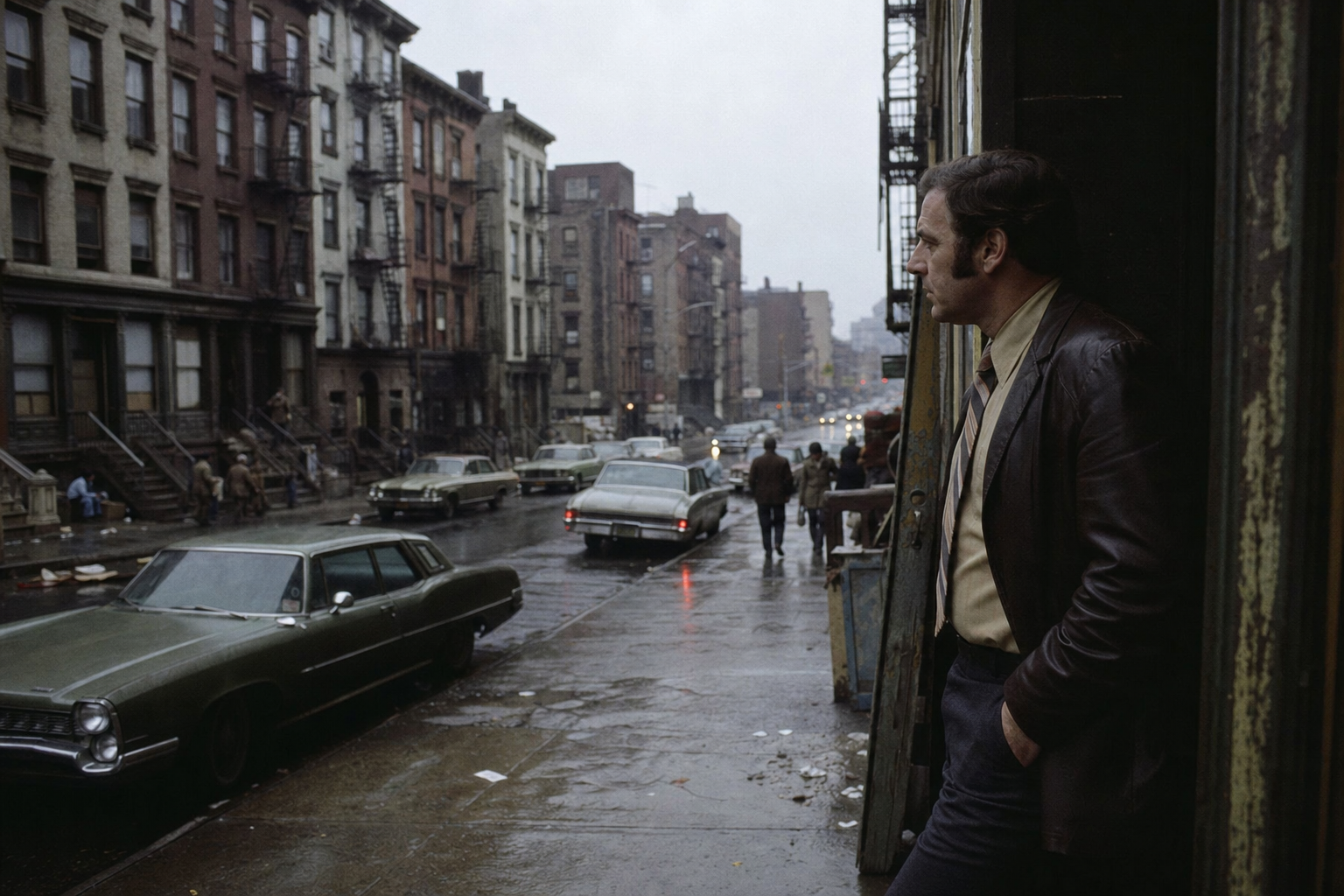
It is 1971, and New York is in trouble. The subways feel increasingly unsafe after dark. Parts of the Bronx are beginning their long decline. Crime, financial pressure and failing infrastructure have begun to alter the city’s sense of itself. Friedkin absorbs all of this into the texture of the film, using the city not as a backdrop but as an antagonist — a place actively working against the people trying to live in it.
Detective Jimmy Doyle — Popeye — is a product of that environment. Gene Hackman does not play him as a hero. He is abrasive, borderline racist, willing to bend the law in service of a result only he fully believes in. He eats pizza standing on a street corner in the cold. He stands in a doorway at three in the morning, watching. He belongs to the city in the way only people who cannot leave it do.
The car has not appeared yet. When it does, nobody will mistake it for a movie star.
Popeye Doyle
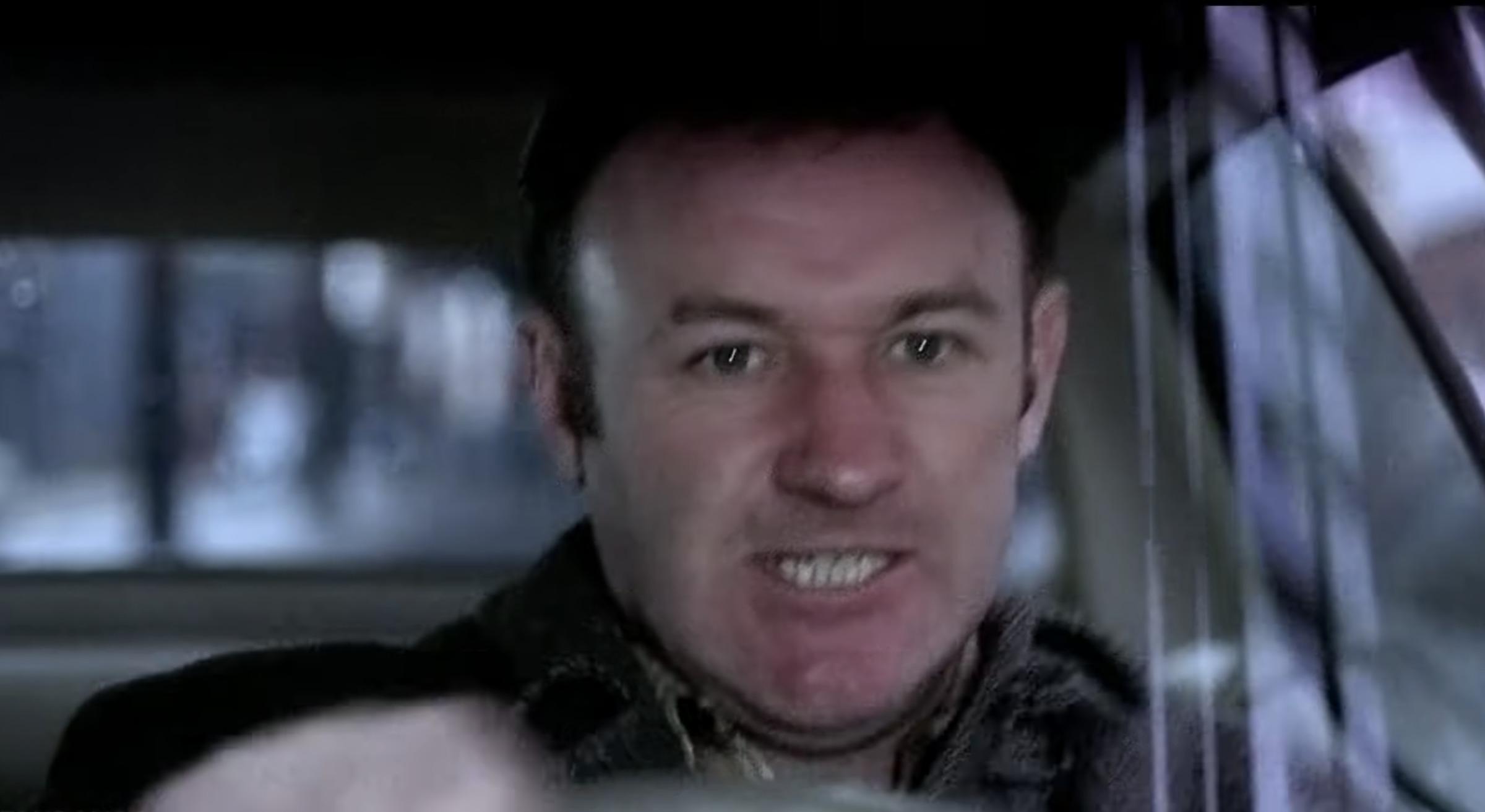
Gene Hackman won the Academy Award for Best Actor for a performance built on containment rather than display. Popeye Doyle is not a man given to speeches. His intelligence is tactical, physical, intuitive — the product of years spent reading the street rather than reports about it.
Hackman plays him with the particular restlessness of someone who has been right too many times to be comfortable with the people above him. He is compelling not because he is likeable — he is not — but because he is so completely himself: tunnel-visioned, relentless, genuinely dangerous in the way that single-mindedness tends to produce when combined with a badge and a gun.
The character was drawn from life. The real Popeye Doyle was Eddie Egan, an NYPD narcotics detective whose case became the film. Egan was hired as a technical adviser and appears in it, watching Hackman play a version of himself. It is a strange doubling: the authentic man observing the performed man, inside a film that would spend its climactic sequence deliberately blurring the boundary between performance and reality.
Hackman later said he did not initially want the part. He worried about playing someone he could not respect. What he found, working through the material, was that Doyle’s relentlessness was the point — not a flaw to be explained or a trait to be overcome, but what drives the film forward. A detective who paused to reflect on his own methods would not have driven 26 blocks beneath the Brooklyn elevated at 90 miles an hour.
The car needed a driver who had already run out of other options.
An Ordinary Car
The great picture cars of cinema tend towards the exceptional. The Aston Martin DB5 is a machine that would stop traffic in any decade. The Porsche 917K was, briefly, among the fastest things on four wheels. The Minis of The Italian Job are small, defiant and irresistible. Even Bullitt’s Mustang — dark green, barely dressed, deliberately stripped of glamour — is still a Mustang. Its ordinariness is performed.
The Pontiac LeMans that Doyle commandeers from a private citizen outside a Brooklyn subway station is simply ordinary. A brown family saloon, visually anonymous beside the Aston Martins, Mustangs and racing prototypes that usually define great screen cars. No gadgets. No supercharged engine. No previous cinematic associations to borrow meaning from.
That choice is central to everything the sequence achieves. When Doyle wrenches open the door and takes the wheel, the transaction is not glamorous. He is appropriating someone else’s transportation. The car does not transform him. It does not elevate the scene. It simply allows the pursuit to continue.
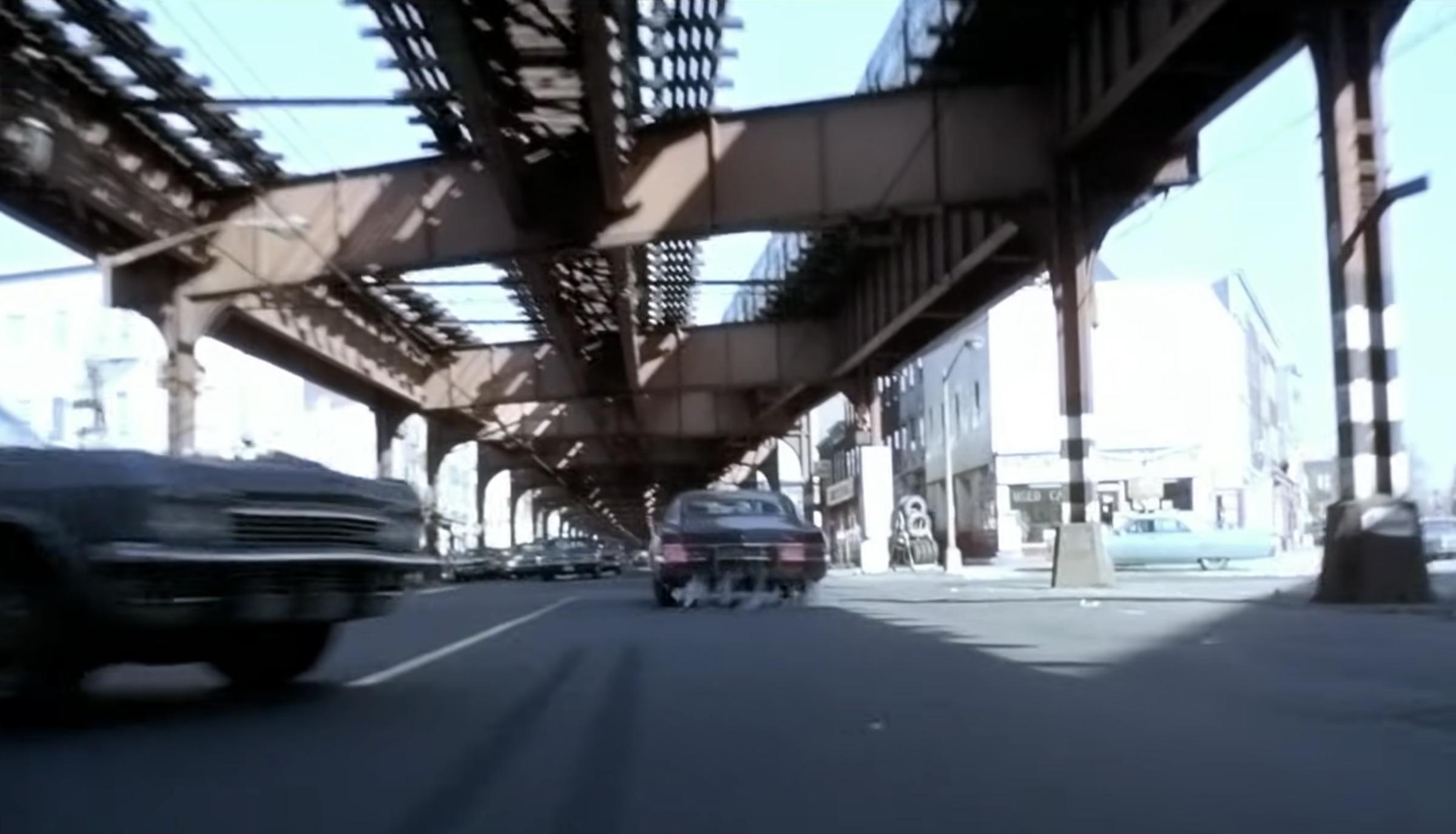
What follows — six minutes of controlled chaos beneath the Bensonhurst elevated tracks — becomes more frightening precisely because of the vehicle at its centre. The LeMans is not built for this. It has no business surviving the intersections it runs, the traffic it scatters, the collision it endures. Its survival feels provisional at every moment. And that provisionality — the constant sense that the situation is about to become irretrievable — is what separates the French Connection chase from every car chase that preceded it.
- Make
- Pontiac
- Model
- LeMans
- Year
- 1971
- Colour
- Brown, four-door
- Role
- Commandeered from a private citizen outside a Brooklyn subway station. The most deliberately ordinary car in the history of the screen car chase — anonymous beside the Aston Martins, Mustangs and racing prototypes that usually define great screen cars.
The Elevated Train
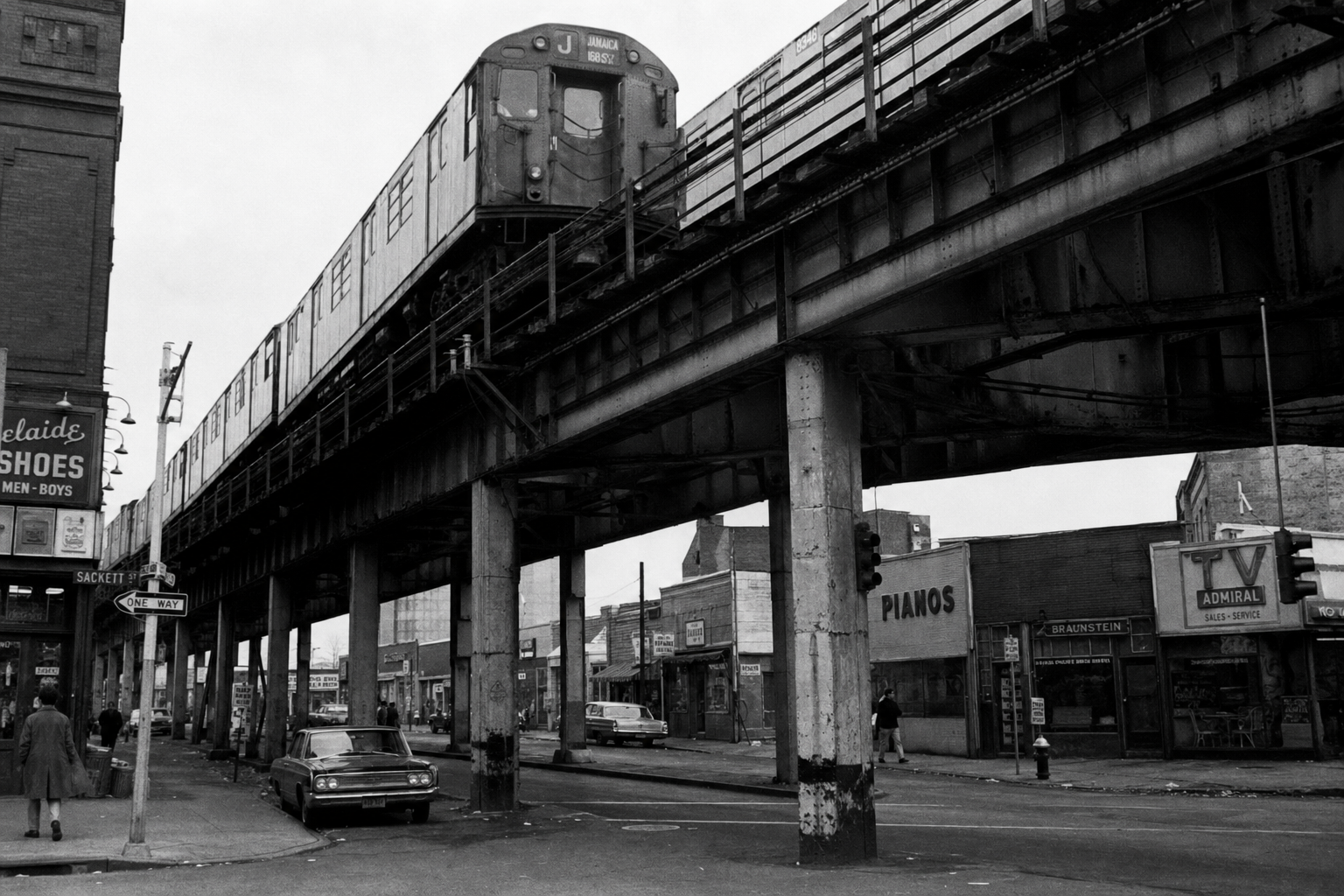
Doyle is not, strictly speaking, chasing a car. He is chasing a train.
Pierre Nicoli — the hitman who has already tried to kill Doyle once — boards an elevated subway car on the BMT West End Line in Brooklyn. He commandeers it. The motorman is shot. The train begins to run, fast and out of control, above the streets through which Doyle is driving below.
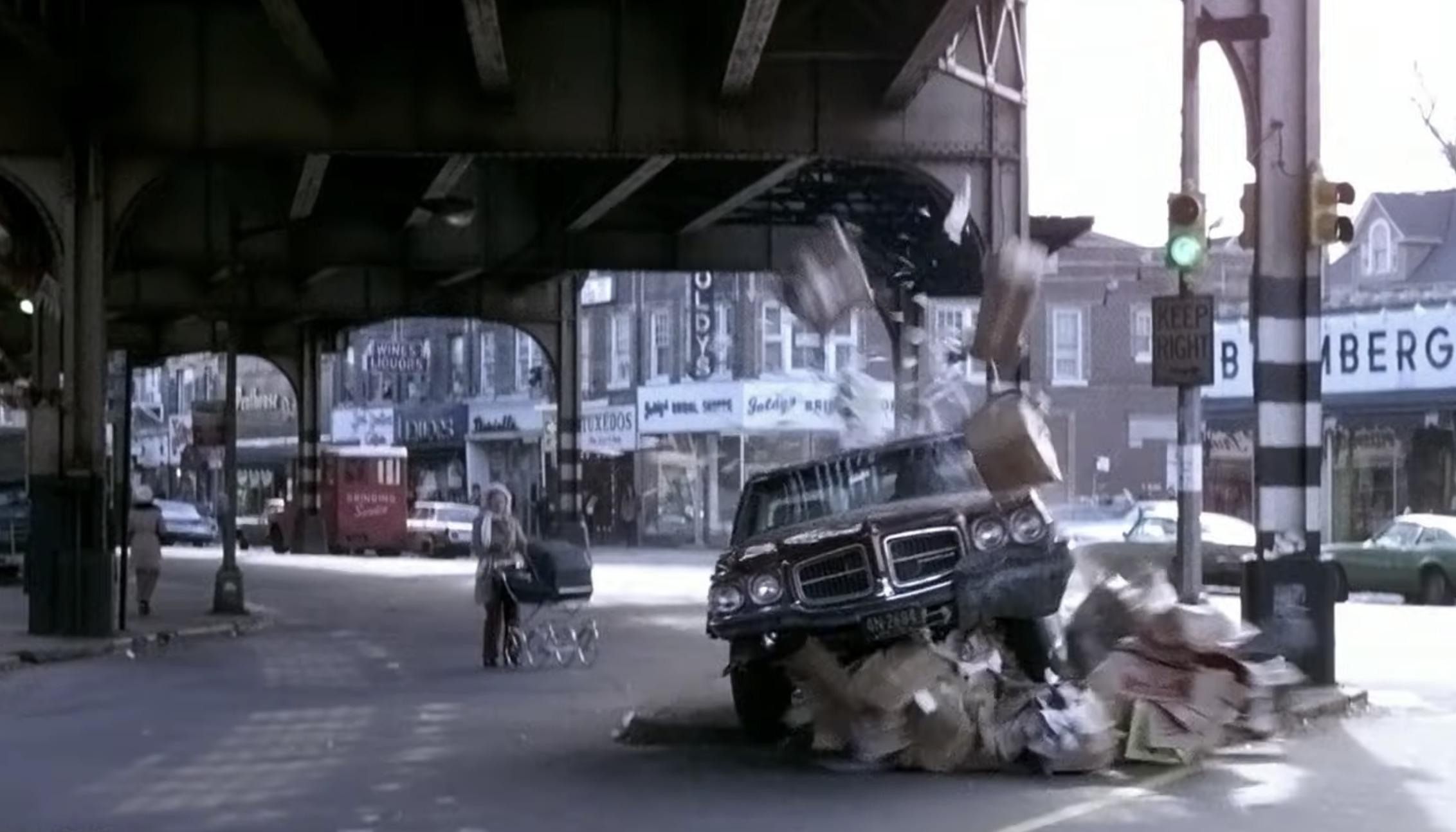
The sequence begins in controlled pursuit and almost immediately loses its footing. Doyle commandeers the Pontiac and forces it into traffic, the siren thin beneath the heavier noise of the elevated structure grinding above him. The camera stays low, pressed close to the car, so that the pillars come at you the way they come at Doyle — suddenly, from the edge of the frame, a concrete obstacle that was not there and then is, then gone, another arriving behind it. The Brooklyn streets that appear ahead of him are not empty. Buses make their stops. Delivery vehicles sit at angles. Pedestrians appear between parked cars. The Pontiac enters each new block as though the city has been given no warning that it is coming.
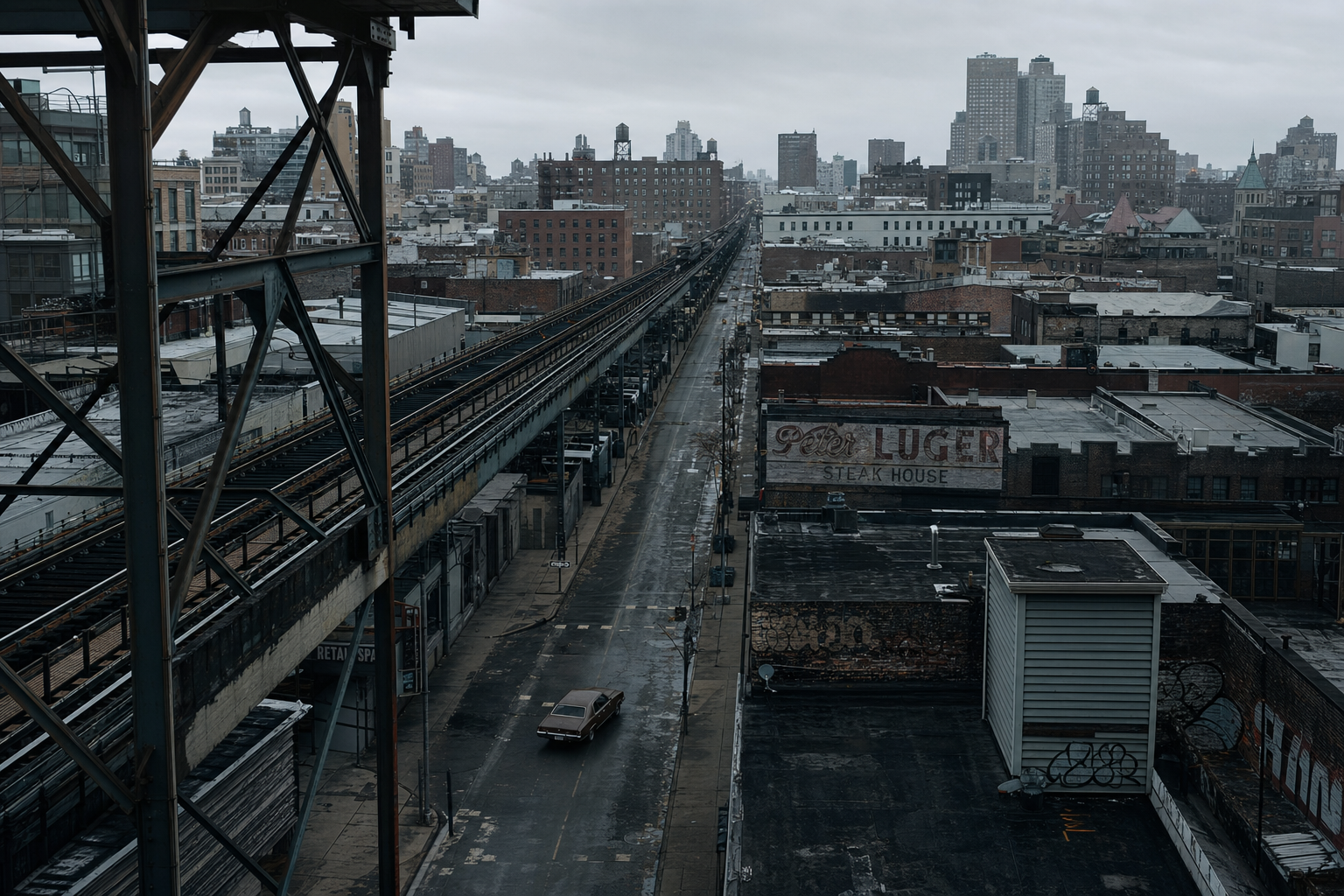
The spatial logic of the sequence is essential to its effect. Doyle cannot close the gap through speed alone. The train above him moves in a fixed line, station to station, while he is forced to navigate intersections, traffic lights, pedestrians and the concrete pillars that hold the elevated structure above his head. This structure means the sequence is never simply a chase. It is a problem-solving exercise conducted at speed, under conditions of genuine physical danger. The elevated tracks above give the sequence a ceiling — a roof of steel and noise that traps everything below it, pressing the action downward into the streets. There is no sky in this sequence. There is only what is immediately ahead, and how much of it can be cleared before the next thing arrives.
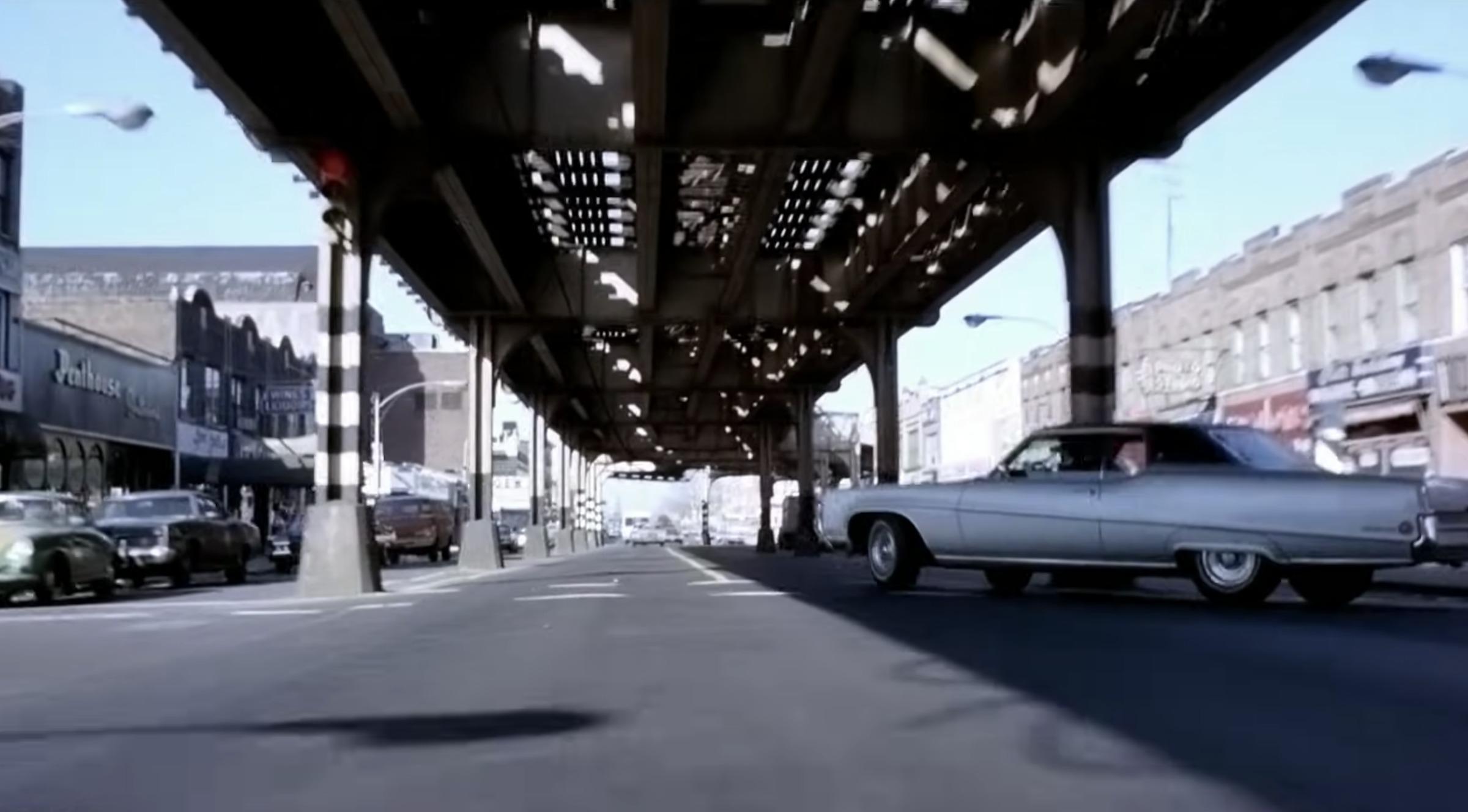
Friedkin understood that the chase’s geography was its drama. The city is not neutral terrain over which two competitors run. It is the obstacle. The pillars. The corners. The other vehicles. The red lights that Doyle ignores. The woman with a pram who appears, suddenly, from between parked cars.
- Borough
- Brooklyn, New York City
- Country
- United States
- Key structure
- BMT West End Line elevated railway
- Filming period
- Five weeks, late 1970
- Role in Film
- Not a backdrop but an antagonist. The elevated railway gave the chase its ceiling of steel and noise, pressing the action downward into the streets. The 26-block run beneath the Bensonhurst tracks is defined by the fixed geometry of the structure above — a route Doyle cannot follow exactly, a city that offers nothing but obstacles below.
Filming Beneath the Tracks
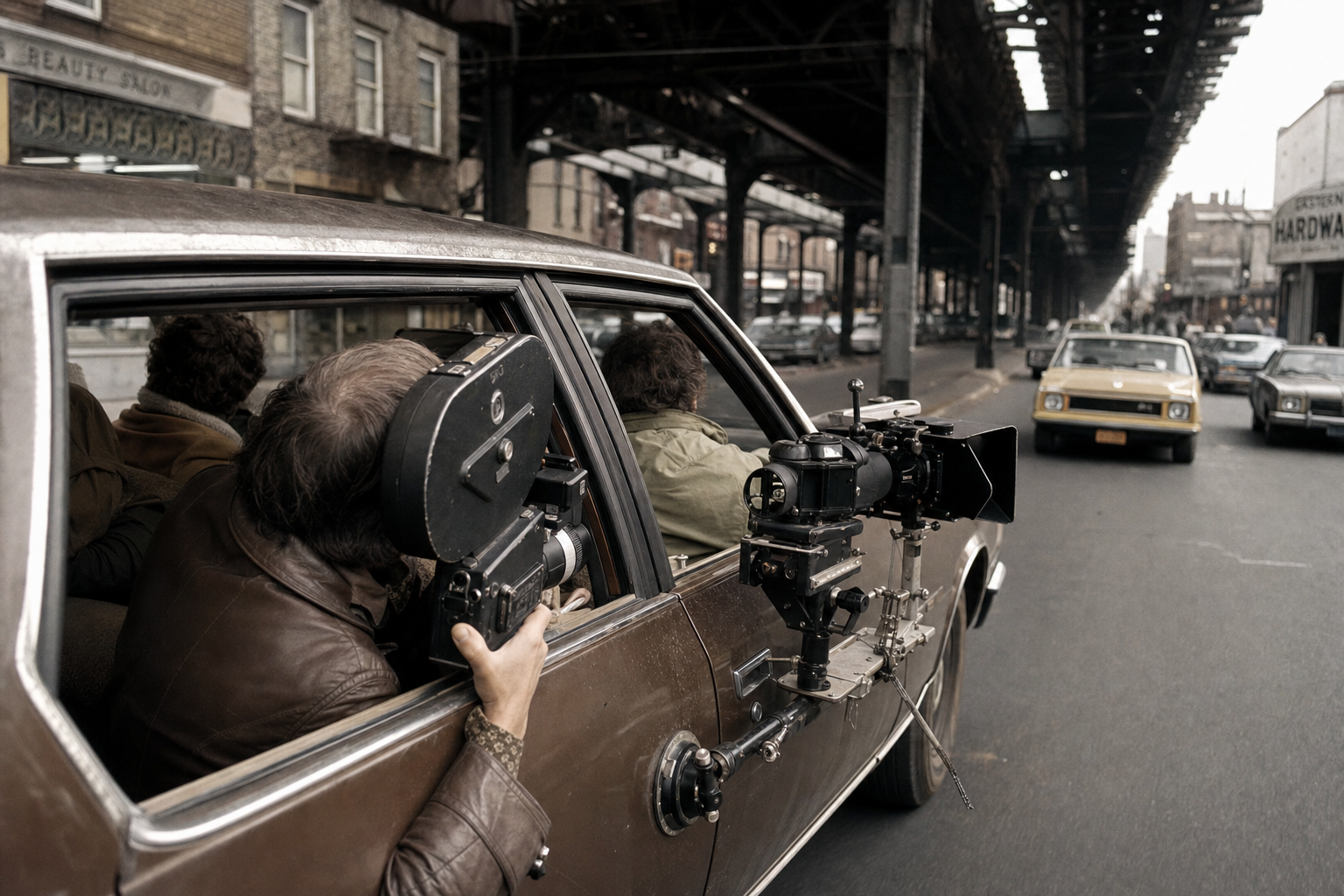
The sequence took five weeks to shoot. Much of it was carefully staged, block by block — traffic controlled over short sections while the cameras found their angles and the stunt choreography was set. But Friedkin understood, looking at the early footage, that careful construction still looked too safe. What the sequence needed was for the control to disappear.
For the principal high-speed run, it did. Bill Hickman drove 26 consecutive blocks at between 70 and 90 miles an hour with no traffic management in place, Friedkin alongside him, three cameras mounted to the Pontiac and whatever the city chose to put in the way. Roizman sometimes undercranked the chase footage to 20 or 18 frames per second, amplifying the apparent speed while the cars were already travelling faster than the sequence needed. Friedkin rode because his camera operators — who had families — declined.
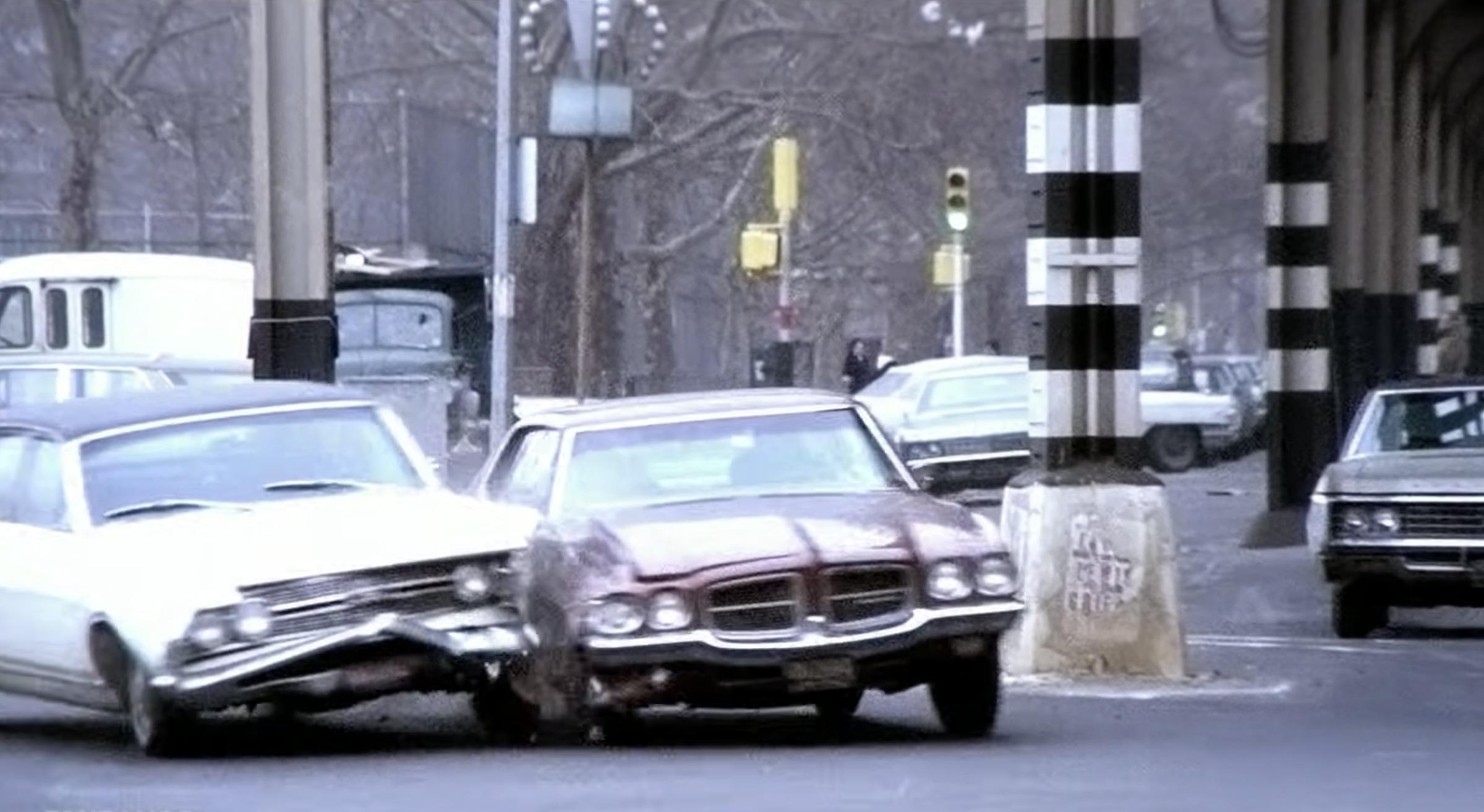
One collision in the sequence was real. Cinematographer Owen Roizman later recalled that a stunt driver missed his mark and struck a white car, spinning it around. The accident had not been staged. Friedkin kept it in the film — the cut from the moment of impact to the Pontiac continuing is seamless — another detail absorbed into the sequence’s documentary texture rather than edited away.
Roizman later described the experience of shooting under the elevated tracks as working inside a particular kind of light that could not have been manufactured. Trains passing overhead would intermittently block the sky. The quality of the available light changed constantly. He made no attempt to compensate. The result is a sequence that looks like what it was: a film crew at the limits of what they could control.
Bill Hickman
Bill Hickman is not a name that appears above the title. He did not win an Academy Award for The French Connection. He did not give interviews or attract a biography. He was a stunt driver, and what he did beneath the Bensonhurst tracks in late 1970 helped redefine what driving for the camera could mean.
Hickman had driven in Bullitt three years earlier, coordinating the San Francisco sequence that defined what the American screen car chase could be. He understood, better than almost anyone on a film set in 1971, what a car could be made to do on public roads and what the camera would need to see for the result to be credible.
For The French Connection, his contribution was not simply technical. Friedkin has described how Hickman, during a preparatory drive through the chase route, began to demonstrate what the sequence could become — accelerating through the intersections, ignoring the lights, threading the Pontiac between traffic and pillars at speeds that the film’s producer found alarming enough to consider stopping. The demonstration helped establish how far the finished sequence might go.
Hickman drove with Hackman beside him — not as a passenger positioned safely behind the camera, but in the seat visible on screen. Hackman did a substantial amount of the driving himself, while Hickman handled the most dangerous high-speed work. The arrangement produced something unusual: an actor who was genuinely, rather than approximately, present in the danger on screen. Hackman’s reactions — the flinching, the bracing, the steering input that looks like instinct because it was — are not performances. They are responses.
- Role
- Stunt driver / stunt coordinator
- Also known for
- Bullitt (1968)
- Contribution
- The principal 26-block high-speed run — 70 to 90 miles an hour, no traffic control, three cameras mounted to the car, William Friedkin alongside him. Drove with Hackman in the seat visible on screen throughout the sequence.
Danger and the Production Mythology
Every account of the French Connection chase arrives trailing the same stories. Friedkin rode in the car because his cameramen would not. The collision was real. Friedkin later recalled that securing permission to board the elevated train cost the production $40,000 and — at the Transit Authority official’s specific request — a one-way ticket to Jamaica. The official, Friedkin said, told him: if I give you permission to do this, I will be fired.
The street chase was different. There were no permits for the 26-block run. There was no official sanction for what Hickman drove through. The mythology that surrounds the sequence tends to collapse the two together — the whole thing shot illegally, all of it uncontrolled — but the reality is more interesting. The chase was carefully constructed until Friedkin decided careful construction still looked too safe. The danger of the principal run was deliberate. And it was added to a sequence that was already, in its staged portions, among the most ambitious pieces of automotive filmmaking yet attempted.
Friedkin later reflected that he would not make the same choices today. The world has become too litigious, too regulated, too aware of consequences. But the mythology has a useful function: it preserves, in compressed form, something true about what the sequence required. It was not reckless instead of careful. It was reckless in addition to careful. And that distinction — the moment when controlled production gave way to something genuinely uncontrolled — is visible in the film.
- Role
- Director
- Also known for
- The Exorcist (1973), Sorcerer (1977), To Live and Die in L.A. (1985)
- Contribution
- Understood that careful construction still looked too safe — and removed the controls for the principal run. Rode in the car himself because his camera operators would not. Left the accidental collision in the finished film.
The Edit and the Sound
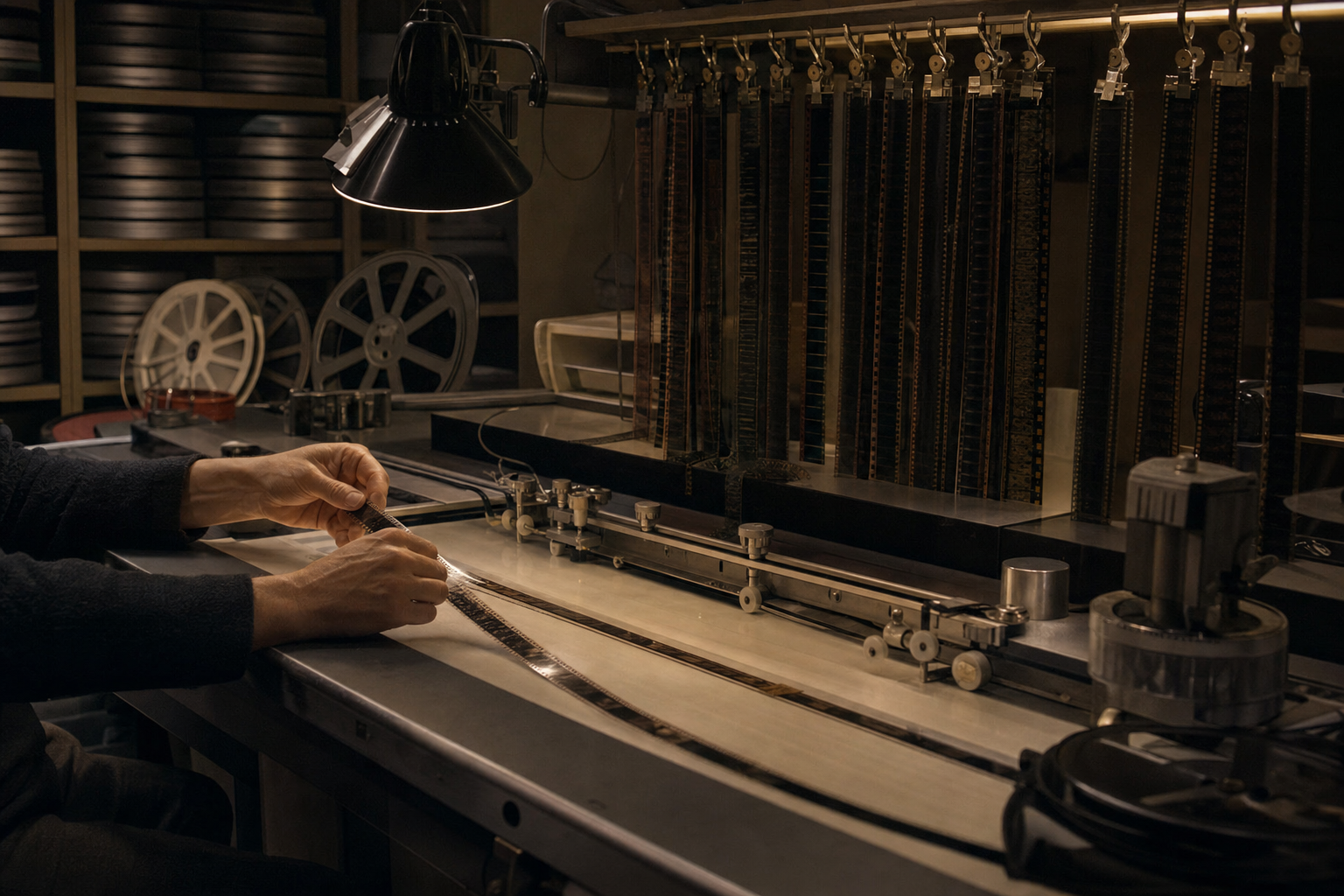
If Bill Hickman made the sequence possible, the editor Jerry Greenberg made it inevitable. Greenberg won the Academy Award for Best Film Editing for work that extends across the whole film — but the chase is its centre of gravity, and those six minutes changed how film-makers thought about what a cut could do.
Greenberg cuts on movement rather than logic. The rhythm shifts between ground level and elevated track, between Doyle’s interior and the surrounding city, between close reaction and wide consequence, without the sequence ever feeling assembled. It feels observed. The edits arrive at the moment of maximum impact and leave before the moment resolves, which means the viewer is perpetually slightly behind events — catching up, processing, finding ground that immediately gives way to the next cut.
Watch what Greenberg does when Doyle nearly loses the train. The cut from his face — jaw set, eyes tracking the elevated structure through the windscreen — to the rear of the departing subway car is almost instantaneous, the gap between the two images so compressed that it takes a moment to register which is car and which is train, which is street-level and which is above it. Then a wider shot, the Pontiac small beneath the tracks, the scale of the city suddenly restored. Then close again: steering wheel, hands, an intersection arriving faster than it should. Greenberg never lets you settle.
The sound works in the same register. Production sound mixer Chris Newman recorded the elevated train material; the car sound work was supervised at Fox by Don Hall. The Pontiac’s engine is present without being romanticised — it does not sound powerful so much as strained, a family saloon being asked to do something it was not designed for. The elevated structure creates a particular acoustic pressure, a compression of noise bearing down from above. When trains pass overhead, the sound does not arrive as soundtrack. It arrives as weather.
- Role
- Director of photography
- Contribution
- Sometimes undercranked the chase footage to 20 or 18 frames per second to amplify the apparent speed. Worked in the available light beneath the elevated tracks without supplementing it — because to do so would have been impossible, and the result was exactly right.
What Friedkin Changed
Before The French Connection, the car chase was a set piece. Directors planned it, choreographed it, stunt-coordinated it and shot it within a defined envelope of controlled danger. The purpose was spectacle: the proof that cinema could manufacture excitement unavailable elsewhere. Speed was the point. Geography was the stage.
Friedkin disagreed, or at least refused to accept that the existing approach was adequate for the story he wanted to tell. The French Connection required a chase that felt like an emergency rather than a performance. The distinction mattered to him because the character of Popeye Doyle was built on emergency — on the gap between what the law allowed and what the situation required.
An emergency does not accommodate beauty. It does not offer good angles or well-lit subjects. It offers what is there: the available light, the actual traffic, the real collision that was not in the script. Friedkin took the available light and put it in the film. He took the actual traffic and drove through it. He left the collision in the cut.
After The French Connection, film-makers understood something new: that the car chase could be used not just to generate excitement but to generate dread. That a chase could feel like it might not end well, even when the audience suspects the protagonist will survive. That the vehicle at the centre of the sequence did not need to be heroic, provided the situation was desperate enough.
The Car Wasn’t Mastering the City
The Italian Job gives its Minis the freedom of Turin — a city that seems to open itself to the chase, offering sewers and rooftops and a factory track as if the whole of the city were a circuit designed for the purpose. The Minis are joyful. They belong.
Bullitt’s Mustang masters San Francisco. It rises to the geography of those hills and becomes, briefly, the most powerful thing on them. The Mustang controls the sequence’s rhythm. Bullitt gets to decide how the chase runs.
The Pontiac LeMans in The French Connection does not belong. It does not master anything. Doyle has taken a car from a stranger, in a city that is barely tolerating his presence, to chase a train on a route he is improvising as he goes. The LeMans is hit by another vehicle. It loses time at intersections. It is not a match for the city through which it is moving. Every block it survives feels contingent.
The car is not mastering the city. It is trying to survive it.
In the broader history of the screen car chase, that distinction becomes the sequence’s lasting contribution. Speed, choreography and spectacle were already available. What The French Connection added was the possibility of failure — genuine, unmanaged, consequential failure — as the thing against which the chase was running.
Doyle catches his man. But it is not because the car was equal to the city. It is because Doyle, in the end, was more desperate than the city was indifferent.
- Role
- Editor
- Award
- Academy Award for Best Film Editing, 1972
- Contribution
- A chase sequence cut on movement rather than logic, in which the rhythm shifts between ground level and elevated track without the result ever feeling assembled. The viewer is perpetually slightly behind events — catching up, finding ground that immediately gives way to the next cut.